
2026-11-04

Product Description
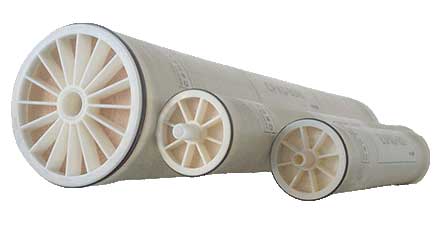
Reverse osmosis membranes are artificial semi-permeable membranes with certain characteristics that mimic biological semi-permeable membranes and are the core building blocks of reverse osmosis technology. The principle of reverse osmosis technology is that other substances cannot pass through a semi-permeable membrane under the effect of an osmotic pressure higher than that of the solution, and these substances and water are left behind.
Working Principle
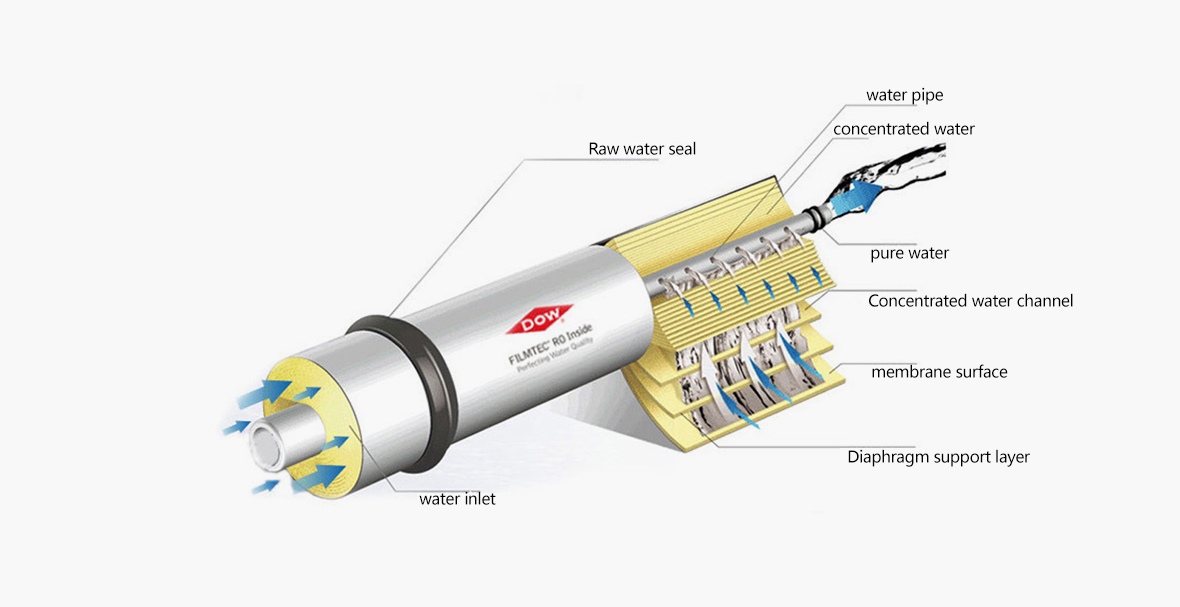
Reverse osmosis is the process of applying a pressure greater than the osmotic pressure of the solution on the concentrated solution side, forcing the water molecules to pass through the semi-permeable membrane into the dilute solution in the reverse direction (opposite to the natural direction of osmosis), as in the reverse osmosis process, the water molecules on the concentrated solution side flow through the semi-permeable membrane into the dilute solution, while the vast majority of the solutes (dissolved solids) cannot pass through the membrane and are retained. Therefore, the concentrated solution is further concentrated, or dehydrated, and the dilute solution is diluted and purified, or desalinated.
Technical parameters
US original imported Dow RO membraneFailure rate: ≤0.003%
Preservation method: dry film (no chemical protection liquid required)Warranty Period: 1 year
Effectively remove bacteria, chemical pesticide residues, heavy metal ions, radioactive particles, residual chlorine, microorganisms, organic matter and other harmful substances from water Desalination rate (filtration effect): ≥98%
Can be customized according to different working conditions
HYDRANAUTICS Membranes imported from the USA
A composite polyamide reverse osmosis membrane with high desalination rate and high water permeability, suitable for industrial water treatment such as ultra-pure water for the electronics industry and boiler make-up water for power plants
Original Toray membrane imported from Japan
Suitable for the desalination and deep treatment of brackish water, surface water and tap water with a salt content of approximately 2000 ppm or less. It has a very low operating pressure and a high water yield, which results in significant savings in system operating costs.
Customer Cases


 sales02@xxfilter.com